

Netiquette means good manners online. The aim is simple: communicate clearly, respect other people, and avoid sharing things that should stay private.
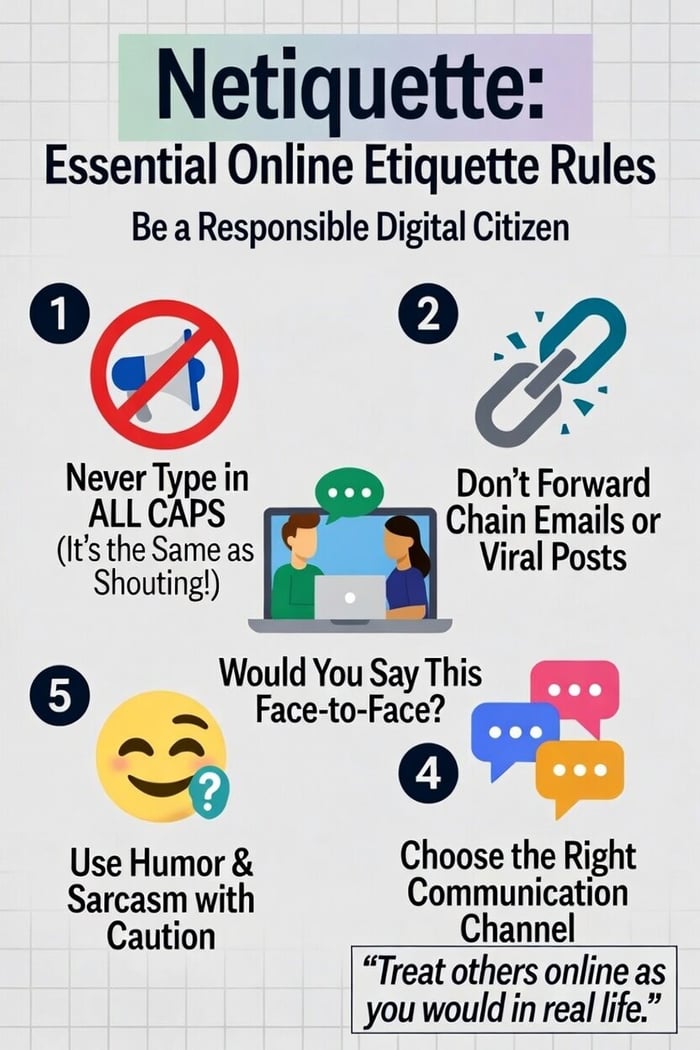
1. Remember There Is a Person Reading
Write as you would speak to someone face to face. Disagree with an idea without insulting the person. Before sending an angry reply, take a break and reread it. [2]
2. Make Your Message Easy to Understand
- Use a useful subject line for email.
- Put the main request near the beginning.
- Break long messages into short paragraphs.
- Avoid writing a whole message in capital letters; it can look like shouting.
- Be careful with sarcasm. Without a voice or facial expression, the meaning may be missed. [1]
3. Use Reply All Only When Everyone Needs the Answer
Check who will receive your message. A short “thanks” usually does not need to go to a large group. When emailing unrelated people, consider BCC—the option that hides recipients’ addresses from one another.
4. Respect Privacy
Ask before sharing someone’s photo, contact details, or private message. Do not post customer information, passwords, or confidential work documents in public chats or social media. [2]
5. Check Before You Share
Read the original source rather than just a headline. Check the date and whether another reliable source supports it. If you quote or reuse someone’s work, name the creator and link to the source where appropriate. Linking does not automatically give permission to copy the whole work.
6. Be Considerate With Files and Links
Explain what you are sending. Ask before sharing a very large attachment, and use an approved sharing link for work files. Make sure the right people have permission to open it.
7. Keep Online Meetings Courteous
- Join on time and check your microphone.
- Mute when you are not speaking if there is background noise.
- Let others finish before responding.
- Ask before recording or taking screenshots.
- Avoid sharing unrelated notifications when showing your screen.
8. Follow the Group’s Rules
A work chat, family group, and public forum may have different expectations. Read the rules, stay on topic, and report harassment rather than joining an argument. Good manners do not require tolerating abuse. [1]
9. Fix Mistakes Calmly
If you shared something incorrect, correct it clearly. If you upset someone, acknowledge it. Avoid turning a small misunderstanding into a public dispute.
10. Be Careful With Unexpected Requests
A polite-looking message can still be a scam. Verify requests for money, passwords, or account changes using a contact method you already trust. Read our online safety guide for practical precautions.
The simple rule: pause before posting and ask whether the message is clear, useful, respectful, and safe to share.
Sources
Sources checked October 9, 2026. Numbered links above match these references. Buying and service recommendations are PC Ninja’s advice, not guarantees.
- [1] Texas A&M International University. Netiquette: Etiquette Guidelines for Distance Learning. Accessed October 9, 2026.
- [2] Colorado State University. Core Rules of Netiquette. Accessed October 9, 2026.